Short version: national 2026 averages from Lawn Love put an installed paver patio at $8 to $24 per square foot, or about $3,350 for a 280 square foot patio. At those rates a 16x20 patio comes to $2,560 to $7,680 before extras. In Metairie, soft clay, drainage work and tearing out old concrete tend to push a quote higher than that.
This guide is for homeowners pricing a patio in Metairie, Kenner, River Ridge and New Orleans. The figures come from national cost guides published by Lawn Love, HomeGuide and Angi, and we name the source next to each number so you can check it yourself.
The local adjustments matter more here than in most of the country. Jefferson Parish sits on soft, wet clay, and New Orleans averages about 62.7 inches of rain a year according to NOAA data compiled by Statista, the most of any major US city. A patio laid on a thin base over that soil can settle within a few seasons, which is why a good local quote puts most of its money into the base and the drainage.
How much does a paver patio cost in Metairie in 2026?
Lawn Love's November 2026 guide gives a national average of $3,350 for a 280 square foot paver patio, with most homeowners paying between $2,275 and $6,950. A small, simple patio can start near $500, and large, complicated builds reach about $11,665. Metairie jobs usually land in the middle or upper part of that range because of the base prep our soil needs.
Lawn Love breaks the price into two pieces. Materials run $3 to $30 per square foot depending on what you choose. Labor runs $5 to $15 per square foot when a crew prices by area, or $50 to $80 an hour when they bill by time. Add the two together and you get the $8 to $24 per square foot installed range most contractors quote.
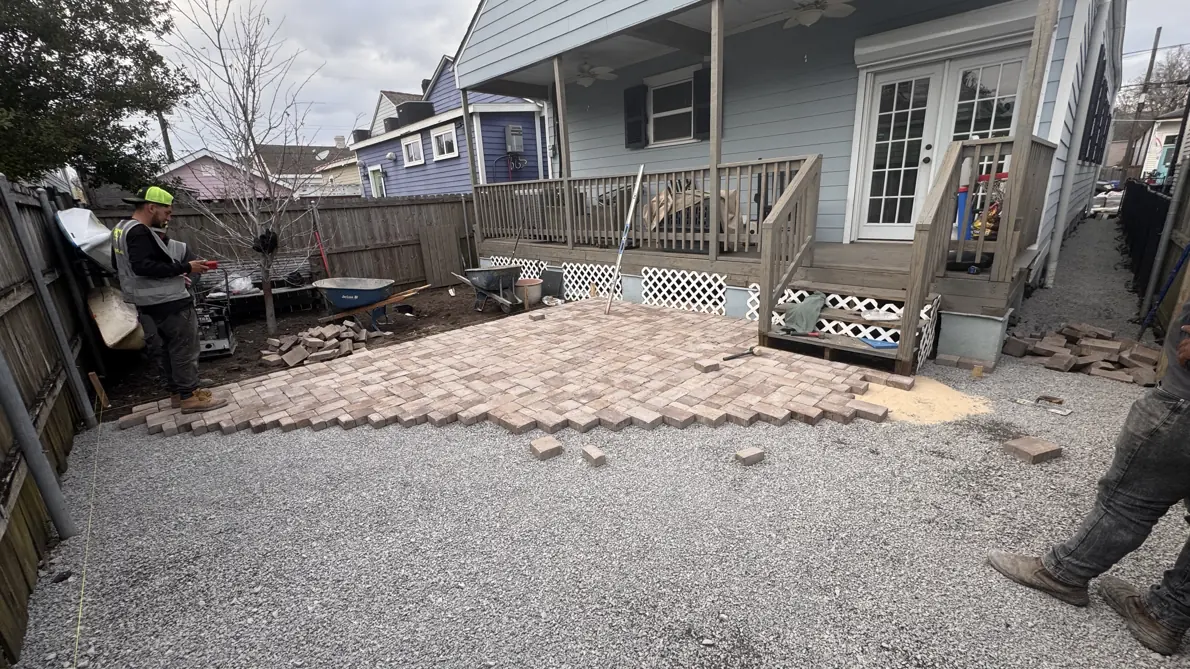
The pavers themselves are often the smaller part of the bill. A plain concrete paver costs $4 to $6 per square foot. Digging out the yard, hauling the soil away, bringing in gravel, compacting it in layers and setting edge restraint can cost as much or more. Our paver patio installation in Metairie page shows the patios we build and the base that goes under them.
What do pavers cost per square foot by material?
Material drives most of the installed price. HomeGuide lists concrete pavers at $8 to $20 per square foot installed, brick at $10 to $25, travertine at $13 to $45 and flagstone at $15 to $45. Angi puts installed flagstone at $15 to $30. Concrete pavers are the budget option and natural stone sits at the top.
Concrete pavers are what most Metairie homeowners pick. Lawn Love prices the pavers alone at $4 to $6 per square foot. They are made to tight, consistent sizes, and if one cracks it can be pulled and replaced. For a family patio with a grill and a table, this is where we usually start the conversation.
Clay brick pavers cost $4 to $8 per square foot for the brick itself according to Lawn Love, and $10 to $25 installed according to HomeGuide. Brick suits older homes in Old Metairie and Uptown New Orleans, where red brick is already on the walls and steps. The color is fired into the clay, so it does not fade in full sun.
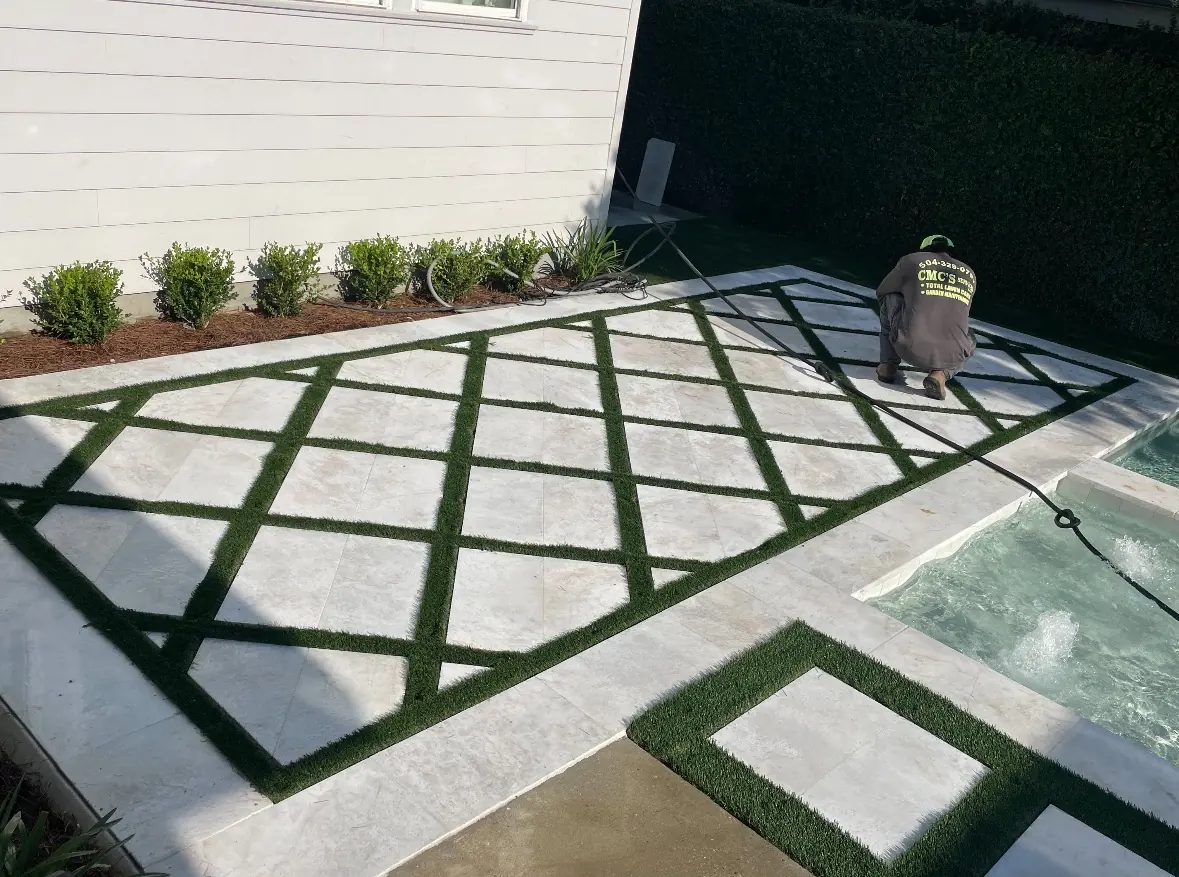
Travertine is a natural limestone. HomeGuide prices it at $13 to $45 per square foot installed, with most people paying $10 to $15 per square foot for the stone. The same guide says travertine stays 20% to 30% cooler than concrete in direct sun, which is why it shows up so often around pools where people walk barefoot in July.
Flagstone is the most expensive choice on most lists. Angi gives $15 to $30 per square foot installed and a 2026 national average of $4,500 per project. Every piece is cut and fitted by hand. Angi also separates dry-laid flagstone, set on sand and gravel, at $1,900 to $4,400 from wet-laid flagstone, set on a poured concrete slab, at $2,700 to $7,000.
How much is a 12x12, 16x20 or 20x20 paver patio?
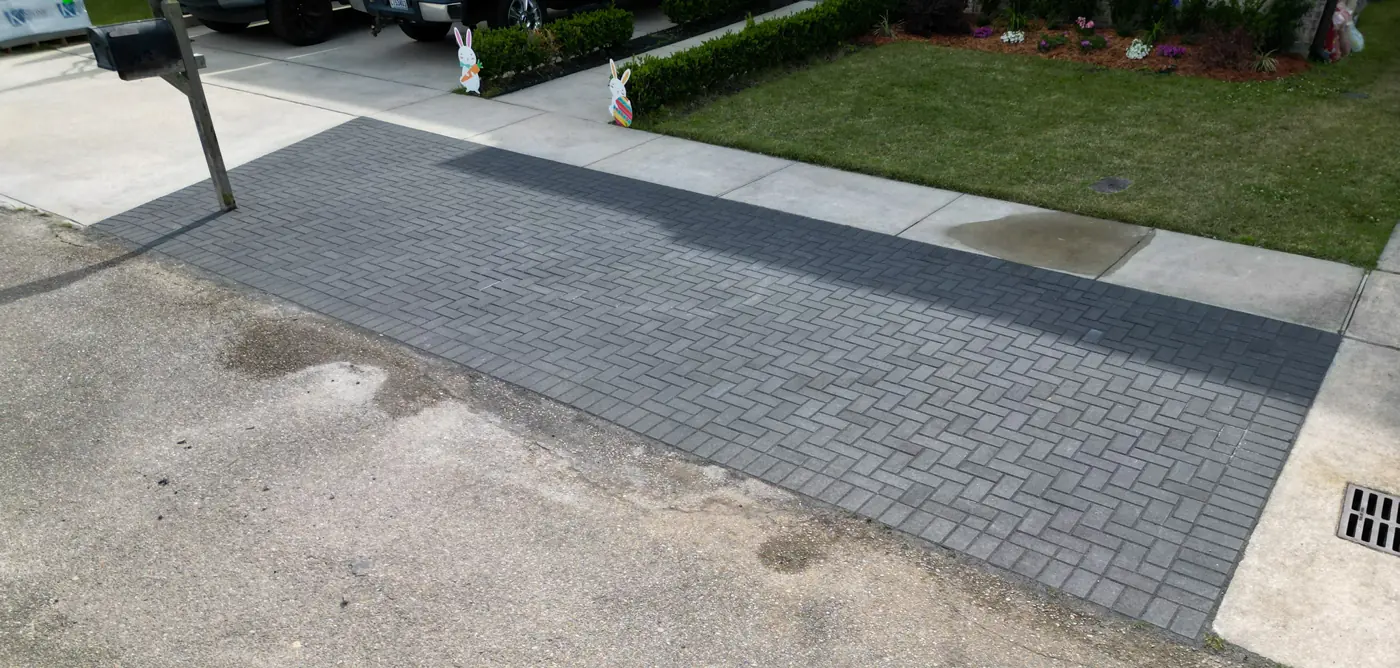
Applying the per square foot ranges above, a 12x12 concrete paver patio (144 square feet) costs about $1,150 to $2,880. A 16x20 (320 square feet) runs about $2,560 to $6,400, and a 20x20 (400 square feet) about $3,200 to $8,000. Natural stone at the same sizes can run twice as much.
The concrete, brick and travertine totals are HomeGuide's per square foot ranges multiplied by the area. The flagstone totals are Angi's own figures by patio size from its flagstone patio cost guide.
Which size fits your yard? A 12x12 holds a bistro set, or four chairs around a fire pit. A 16x20 fits a dining table for six and a grill with room to walk around both. A 20x20 gives you a dining area and a separate lounge area. If a grill island is in your future, plan the space for it now, because adding pavers later means trying to match the color from a different production run.
What raises paver patio cost in Metairie and Kenner?
Five things push a Metairie quote above the national average: deeper excavation and base for soft clay, grading to move water, added drainage, removing an old slab, and edge restraint with polymeric sand. Permit fees can add to it as well. On an honest quote, each one shows up as its own line.
Soil and excavation depth come first. Metairie, Kenner and River Ridge sit on soft clay that holds water and moves as it wets and dries. HomeGuide describes a standard sand-set patio as 4 to 6 inches of compacted gravel under a 1 inch sand bed. On our soil we dig to the deep end of that range or past it, and we compact the gravel in thin layers. More digging means more soil to haul off and more gravel to bring in, and that is usually the biggest local add.
Grading is next. Lawn Love puts site grading for uneven or hard-to-reach areas at $770 to $3,000, depending on size. A patio needs a slight slope away from the house so rain runs off instead of pooling against the slab. Many older Metairie lots have settled unevenly over the years, so our yard leveling and grading work is often part of a patio job.
Drainage can be the deciding line. If your yard already holds water after a storm, a patio makes it worse, because it covers ground that used to soak up rain. A French drain, a channel drain along the patio edge or a catch basin tied to the street may be needed. We price drainage work in Metairie as a separate line so you can see exactly what it costs. Skipping it is the most common reason patios fail here.
Old concrete is common. Plenty of Metairie backyards have a cracked 1970s slab right where the new patio should go. Angi lists patio demolition at $550 to $1,700, plus about $225 per ton to haul the debris away.
Edge restraint and joint sand are small costs with a big effect. Edge restraint is the border that keeps pavers from spreading apart. Polymeric sand fills the joints and hardens once it gets wet, which slows weeds and ants and keeps rain from washing the joint sand out. HomeGuide puts polymeric sand at $0.50 to $1 per square foot and bedding sand at $0.50 to $1.50. Both are cheap, and a quote that leaves them out is cutting a corner.
Then permits. Metairie is unincorporated Jefferson Parish, so building permits go through the Jefferson Parish Department of Inspection & Code Enforcement. Kenner and New Orleans run their own permit offices. CMC's Services handles permitting on the jobs we build.
If you want a real number for your own yard, we will measure the patio area, check the soil and drainage, and give you a written quote with every line priced. Estimates are free, Monday to Saturday, 9 AM to 5 PM.
Are pavers cheaper than poured or stamped concrete?
Plain poured concrete costs less up front. HomeGuide puts a plain slab at $5 to $10 per square foot and stamped concrete at $8 to $19, against $8 to $24 for pavers according to Lawn Love. Pavers cost more on the first day, but a cracked paver is a $5 fix, while a cracked slab often means pouring a new one.
The poured and stamped figures come from HomeGuide's concrete patio cost guide. Its 20x20 poured total is listed directly, and the stamped total is the per square foot rate multiplied by 400.
On Metairie clay, repair cost settles the question for a lot of homeowners. Soil movement cracks rigid slabs, and a crack in stamped concrete is impossible to hide. Paver joints flex, and a corner that settles can be lifted and reset in an afternoon. If you are deciding the same thing for a driveway, the comparison changes because cars put more weight on it, and there are times a poured slab is the better fit, which we also build.
Will pavers sink in Metairie soil?
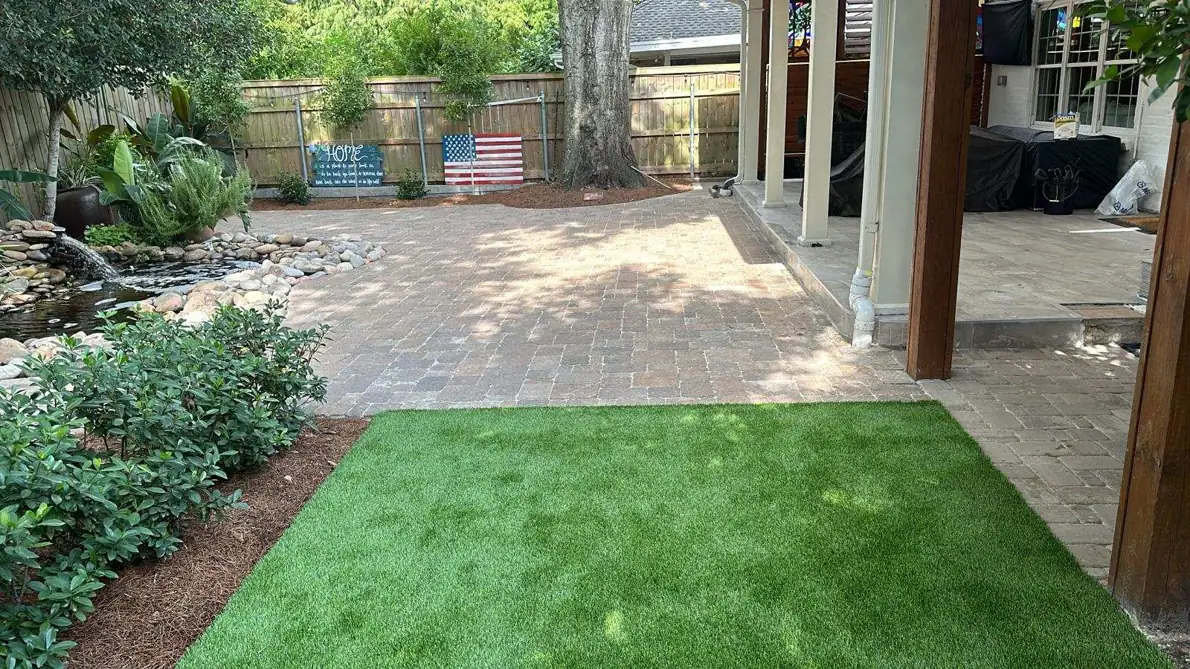
Pavers sink in Metairie when the base is too thin or the gravel was not compacted in layers. Laid on a deep, compacted gravel base with edge restraint and drainage, they hold up well. When a patio sinks, the cause is almost always the base, the soil under it or water running beneath the patio, not the pavers.
Clay swells when it is wet and shrinks during dry spells. When water collects under a patio, the clay softens and the base settles into it. The answer is to keep water moving away: slope the patio, give the runoff somewhere to go, and use a base thick enough to spread the load. On very soft spots, geotextile fabric under the gravel stops the stone from pushing down into the mud.
Heat and rain also affect which paver to buy. For summer heat, light colors stay cooler than charcoal or dark red, and HomeGuide's figure of travertine running 20% to 30% cooler than concrete in direct sun explains why it is popular on pool decks. For rain, choose a paver with a textured or tumbled face rather than a smooth polished one, since smooth stone gets slick when wet. Permeable pavers have wider joints filled with gravel so rain soaks through, and they are worth asking about if your yard drains slowly.
How long does a paver patio take to install?
Most residential paver patios between 150 and 400 square feet take about a week of crew time once work begins. Removing an old slab, adding drainage or a run of rainy days adds time. The design and permit stage before that can take longer than the build itself, depending on the permit office.
Rain is the wild card in Jefferson Parish. A crew cannot compact a soaked base, so a good contractor stops and waits rather than setting pavers on wet gravel.
How do I read a paver patio quote?
A good quote lists the square footage, the paver brand and style, the excavation depth, the gravel base thickness, the type of edge restraint, the joint sand, and any drainage or demolition as separate lines. A quote that is one number with no detail cannot be compared with anything, so ask for the breakdown.
Put the quotes side by side and compare base depth first. A cheap quote with 2 inches of base and a higher one with 6 inches are not pricing the same patio. After that, check who pulls the permit and who hauls away the dirt.
These are the warning signs we tell homeowners to watch for on a patio quote:
- No base depth or gravel type written anywhere on the quote.
- Pavers set on sand alone, with no compacted gravel underneath.
- No edge restraint, or "edging optional" written in.
- Regular sand in the joints instead of polymeric sand.
- Nothing about where rain will go once the patio is down.
- A large cash deposit with no written contract or proof of insurance.
Financing and phasing a paver patio
If the full plan is over budget, build it in stages. Put the money into the base, drainage and main patio this year, then add a fire pit, seat wall or kitchen pad next year. Ask your contractor to run electrical conduit or gas sleeves under the pavers now so nothing has to be torn up later. Some homeowners use a home equity line or a personal loan, so compare rates before you sign.
Seat walls, steps and fire pits are typical second-phase work, and we build those as part of our hardscaping. We also build paver patios in Kenner, River Ridge and New Orleans, and you can request a free patio estimate online or by phone.
Get your paver patio priced line by line
CMC's Services is licensed and insured and based at 5245 York St in Metairie. Tell us the size you have in mind, and we will come out, check the soil and drainage, and send a free written estimate. Call (504) 608-4272, Monday to Saturday, 9 AM to 5 PM.